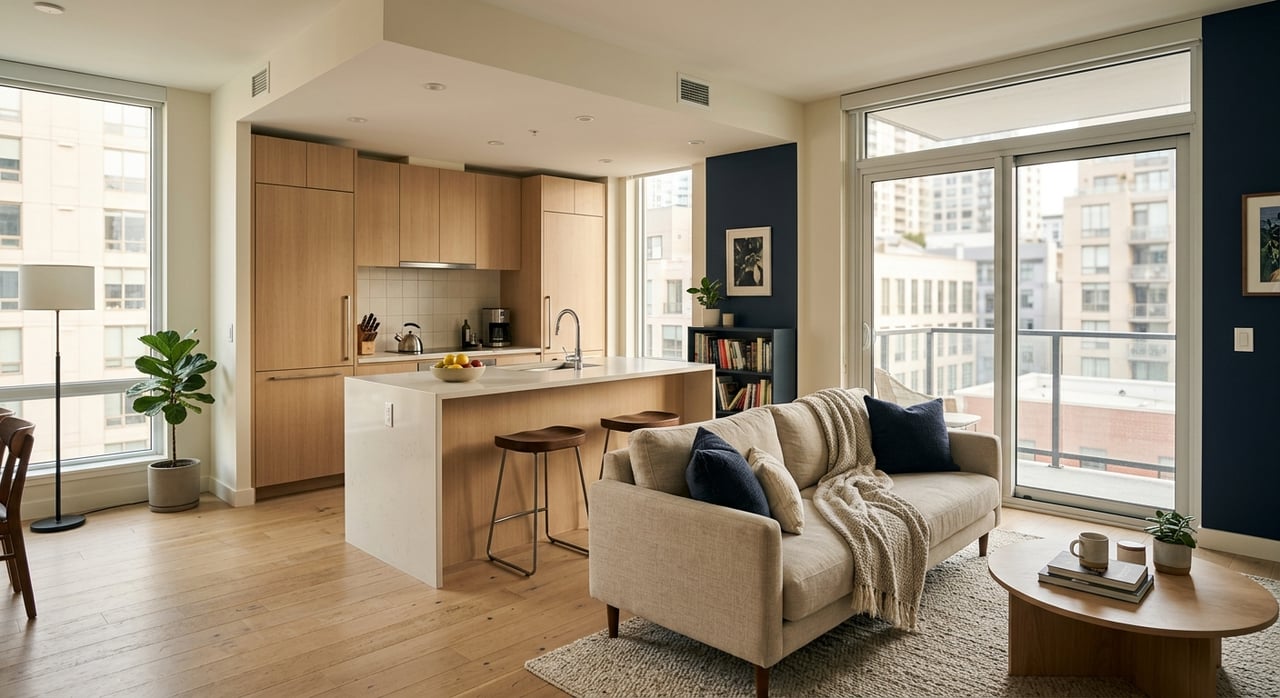
If you picture city living as nonstop noise and tourist crowds, downtown Nashville high-rise life may surprise you. For many residents, it is less about being in the middle of everything every second and more about having daily essentials, entertainment, and shared amenities close at hand. If you are wondering what everyday life really feels like in a downtown tower, this guide will walk you through the rhythm, tradeoffs, and perks of living above the city. Let’s dive in.
Downtown Nashville feels varied
Downtown Nashville is the county’s most urban setting and a major center for work, culture, and daily activity in Middle Tennessee. The Downtown Partnership describes it as 11 neighborhoods across 2 square miles, and the 2026 residential update estimates about 23,000 people live downtown.
That matters because “downtown” is not just one experience. Historic Core, SoBro, South Bank, Hope Gardens, Capitol View, and the East Bank all offer a slightly different feel, even though they are part of the same larger district.
Neighborhood pockets shape daily routines
If you live in the Historic Core, your everyday surroundings may include landmarks like the Ryman, the Arcade, and Printer’s Alley. In SoBro, you are closer to a mix of arts, culture, major attractions, and mixed-use destinations. South Bank brings a more river-oriented setting, while Hope Gardens and Capitol View feel more residential within the downtown footprint.
The Cumberland River also helps define how downtown is organized. The Downtown Community Plan notes that the river divides downtown into east and west banks, and that geography plays a role in how residents move through the area.
High-rise amenities change daily life
One of the biggest differences between a downtown high-rise and a traditional house is how much of your lifestyle shifts from private space to shared space. Official downtown residential pages show many towers include features like rooftop pools or pool terraces, fitness centers, concierge-style staffing, clubrooms, outdoor terraces, grilling areas, workspaces, and private or on-site parking.
You may also find pet-focused features such as dog runs or pet wash stations. For buyers who want lower-maintenance living, these amenities can replace some of the upkeep that comes with owning a larger property.
Convenience is built into the building
In a high-rise, your building often supports parts of your routine that would happen elsewhere in a more car-dependent setting. Instead of driving to a gym, finding a separate coworking space, or maintaining a yard or patio, you may have those options right where you live.
That creates a different rhythm to the day. You can work out before work, take your dog to a designated pet area, or meet friends in a shared lounge without leaving the property.
Walkability becomes part of your routine
A typical day downtown often revolves around walkable errands instead of car-based errands. That is one of the clearest lifestyle shifts for people moving from a suburban setting into a high-rise building.
Places like the Nashville Farmers’ Market make this easy to picture. Located in the urban core beside the Tennessee State Museum and Bicentennial Mall, it includes a retail and food hall with more than 30 restaurants and shops.
Mixed-use destinations make errands easier
Fifth + Broadway is another strong example of downtown convenience. It combines more than 20 retailers, more than 30 eateries, performance stages, a museum, and parking in one destination.
For you, that can mean fewer separate stops in a day. Grabbing a meal, shopping for a few items, meeting friends, or spending an hour exploring can all happen within the same area.
Entertainment becomes part of the backdrop
For many downtown residents, the biggest adjustment is that music, events, and attractions stop feeling like occasional outings and start feeling like part of the neighborhood. Downtown and the nearby core include the Ryman Auditorium, Country Music Hall of Fame and Museum, Frist Art Museum, Ascend Amphitheater, TPAC, and Fifth + Broadway.
That kind of density gives you a lot to do within a short walk or short ride. Live performances, exhibitions, shopping, and dining are not special trips that require much planning. They are simply nearby.
Broadway energy is real
If you are considering a downtown tower, it helps to be honest about the atmosphere. Official venue pages for Lower Broadway note live music every day, and the Historic Core and Broadway corridor are central to downtown Nashville’s music-first identity.
For some buyers, that constant energy is a major perk. For others, it may feel too active for everyday living. The right fit depends on how much you value proximity to entertainment versus a quieter setting.
Green space still has a role
Even in the middle of the city, outdoor space is part of the appeal. Metro Parks says downtown greenways are part of a planned 23-mile City Central loop around the core, giving residents more ways to move through and around the area.
Riverfront Park is another practical asset for daily life. It offers river views, open space, a dog park, a street workout park, and access to the WeGo Riverfront Station.
Outdoor time looks different downtown
If you are used to a private backyard, downtown living will feel different. Instead of stepping into your own lawn, you are more likely to use parks, greenways, terraces, rooftop spaces, and public open areas.
That trade can be a plus if you prefer less upkeep and more shared amenities. It may be less appealing if a large private outdoor space is high on your list.
Getting around is more urban
Downtown Nashville can work well for people who commute, but the transportation pattern is not the same as in a suburban neighborhood. WeGo Central, also known as the Elizabeth Duff Transit Center, is downtown at 400 Dr. Martin Luther King Jr. Blvd.
WeGo operates 27 local and nine regional routes, and the WeGo Star reaches Riverfront Station downtown. From there, connecting buses help riders finish the trip.
You may drive less, but not never
Living in a high-rise can reduce how often you use your car for short trips, but it does not remove the need for planning. Depending on your work location and routine, you may still drive regularly.
The difference is that your choices expand. Walking, rideshare, transit, and shorter local trips can all become more realistic parts of your week.
Parking works differently downtown
Parking is one of the most practical topics buyers ask about, and for good reason. In downtown Nashville, parking is usually a garage-and-lot discussion rather than a driveway discussion.
NDOT manages public parking resources, on-street parking, meters, and parking permits. The downtown partnership also maintains a directory of public garages and surface lots across downtown.
What that means for buyers
If you are moving from a home with an attached garage or easy curbside loading, this can be an adjustment. Everyday tasks like unloading groceries, coordinating guests, or planning around events may require a little more thought.
That does not make downtown parking unworkable. It simply means parking should be part of your decision-making process when you compare buildings and locations.
The lifestyle tradeoff is clear
At its core, downtown high-rise living is a trade. You give up some private space and car-first convenience in exchange for proximity, skyline views, shared amenities, and a more connected, event-driven environment.
That trade works especially well for buyers who value walkability, lower-maintenance living, and buildings with amenities built into daily life. It can also appeal to frequent travelers, professionals, first-time condo buyers, and people who want a more urban routine.
Who may enjoy it most
Downtown high-rise living may be a strong fit if you are looking for:
- A home with shared amenities instead of heavy exterior maintenance
- Easier access to dining, entertainment, and cultural venues
- A more walkable daily routine
- A central location with transit connections nearby
- A lifestyle built around convenience and proximity
It may be less appealing if you strongly prefer:
- A large private yard
- Minimal street activity
- Driveway parking and easy curbside loading
- A quieter, more suburban day-to-day environment
What to picture day to day
So what does everyday life in a downtown Nashville high-rise actually look like? It may mean starting your morning in a fitness center, walking to grab coffee, working from a building lounge or nearby spot, and meeting friends for dinner without ever planning a long drive.
It may also mean hearing the city around you, coordinating parking more carefully, and leaning on shared spaces instead of private outdoor space. For the right buyer, that feels energizing, convenient, and refreshingly low maintenance.
If you are weighing downtown Nashville against another part of the city, the most helpful step is to compare your real routine, not just your wish list. If your ideal day includes walkable options, nearby culture, and a home that supports a lock-and-leave lifestyle, a downtown high-rise may feel like a natural fit.
When you are ready to explore Nashville neighborhoods and find the right match for your lifestyle, connect with Pinnacle Point Properties and Development.
FAQs
What is daily life like in a downtown Nashville high-rise?
- Daily life often includes walkable errands, shared building amenities, nearby dining and entertainment, and less reliance on a car for short trips.
What amenities are common in downtown Nashville high-rise buildings?
- Common amenities shown on official downtown residential pages include rooftop pools or terraces, fitness centers, concierge-style services, clubrooms, outdoor grilling areas, workspaces, pet areas, and on-site or private parking.
How does parking work in downtown Nashville?
- Downtown parking is typically centered on garages, surface lots, meters, and permits rather than private driveways, so parking logistics are an important part of choosing the right building.
Is downtown Nashville walkable for everyday errands?
- Many daily needs can be handled within the downtown core, especially near places like the Nashville Farmers’ Market and Fifth + Broadway, which combine shopping, dining, and other uses in convenient locations.
Who is downtown Nashville high-rise living best suited for?
- It often appeals to buyers who want walkability, lower-maintenance living, shared amenities, and close access to downtown activities and transit connections.